The role of the community association manager has evolved significantly over the past decade. Not long ago, managers were often expected to do everything — accounting, vendor coordination, inspections, communications, compliance, and more. In many cases, a single individual served as the primary operational resource for an entire association. That model, while common, was never sustainable, and it is no longer the standard for high-functioning communities or the companies that manage them.
Today, effective management is built on a more structured, specialized, and technology-enabled approach. The shift is best summarized in a single line: at its core, the manager’s role remains to advise and execute — not govern.
A version of this column by CPE president Doug Newman, CMCA, originally appeared in Common Interest, the official magazine of the Community Associations Institute Connecticut chapter (CAI-CT). What follows is an expanded version written for Connecticut boards.
What does a community association manager do?
A community association manager supports a condominium or homeowners association board of directors in operating the community. The work spans financial reporting and budgeting, vendor coordination and maintenance tracking, architectural and compliance review, insurance and risk management, owner communication, and the administration of board decisions.
But listing tasks misses the point. The real job is judgment: helping a volunteer board see around corners, plan for the capital needs that are coming, and make sound decisions with good information in front of them. The manager who only processes work orders is doing a fraction of the role. The manager who helps a board avoid a special assessment three years before it would have happened is doing the whole thing.
From generalist to a coordinated team model
Modern community association management firms increasingly use internal specialists to support the day-to-day needs of associations. That can include dedicated accounting teams handling financial reporting, payables and receivables, and budgeting support; vendor coordination specialists managing work orders, proposals, and maintenance tracking; architectural review and compliance coordinators; insurance and risk management support; and client service teams handling inbound communication and administrative requests.
This evolution is not about adding complexity — it is about creating efficiency, accuracy, and scalability. By distributing responsibilities across specialized roles, associations benefit from faster and more consistent response times, greater subject-matter expertise, and fewer errors or oversights. Most importantly, the structure frees the manager to focus on their highest and best use: serving as an advisor and strategic partner to the board.
Why the role now demands a higher level of expertise
At the same time, the operating environment for community associations has become far more complex. Boards and managers today are navigating aging infrastructure and long-term capital planning, expanding legislative and regulatory requirements, inflationary pressure on labor and materials, a challenging insurance landscape with rising premiums and stricter underwriting, and heightened expectations from residents around communication and responsiveness.
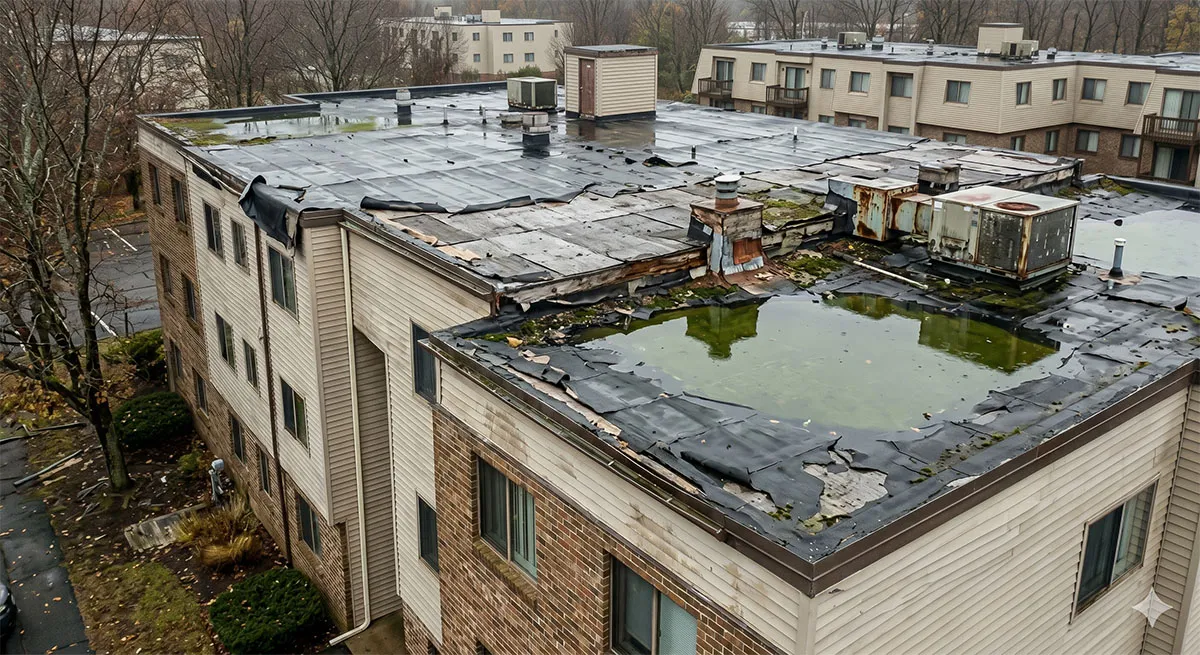
In Connecticut specifically, much of the condominium stock dates to the mid-1980s and early 1990s, which means major systems — roofs, siding, paving, mechanicals — are reaching the end of their useful life across the state at roughly the same time. That makes disciplined reserve planning and realistic budgeting a central part of the manager’s job, not a once-a-year afterthought.
This is no longer a purely administrative function. It requires business acumen, judgment, experience, and proactive planning.
The manager as advisor, not decision-maker
At its core, the manager’s role is to advise and execute — not govern.
Boards are elected to make decisions. Managers are engaged to provide professional guidance based on experience and industry standards, present options along with their risks and recommendations, and then implement board-approved decisions efficiently and consistently. When this relationship is properly aligned, it creates clarity and accountability. When it is not, associations often experience either micromanagement or a lack of direction — both of which undermine effectiveness.
A good manager is comfortable telling a board something it doesn’t want to hear, and equally comfortable stepping back once the board has decided. That discipline is what keeps governance and operations from blurring into each other.
Defining the scope of management services
One of the most common sources of frustration in community associations is unclear scope, often expressed as: “You’re our manager, so you should handle everything,” as if the role were a concierge service. In reality, effective management depends on clearly defined responsibilities and expectations.
Management services generally fall into two categories:
- Base services — routine financial reporting, meeting coordination, communication management, and vendor oversight.
- Project or billable services — capital projects, legal coordination, complex compliance matters, or extraordinary administrative demands.
A well-defined management agreement should clearly outline what is included, what is billable, and how services are delivered. Transparency at the outset protects both the board and management, and minimizes misunderstandings over time.
The manager as a hub of professional coordination
Managers also serve as the central point of coordination for a broader team of professionals — attorneys, insurance agents, accountants, engineers, reserve specialists, and contractors. No manager is expected to be the expert in every discipline. They are, however, expected to recognize when specialized expertise is required, recommend the right professionals, and coordinate their efforts so the work gets executed cleanly.
Boards should empower managers to bring in qualified professionals when needed, rather than expecting every problem to be solved internally. The value is in orchestration: knowing who to call, when, and how to keep the pieces moving toward a board-approved outcome.
Communication structure matters
In an environment of constant connectivity, unmanaged communication can quickly become inefficient and counterproductive. Managers cannot effectively operate as on-demand, 24/7 responders to individual requests from multiple directions.
Establishing clear communication protocols — centralized channels, defined office hours and emergency procedures, and structured board communication through designated points of contact — improves responsiveness, reduces confusion, and allows managers to focus on higher-value responsibilities. Counterintuitively, more structure usually produces faster and more reliable communication, not less.
From process administrator to trusted advisor
Perhaps the most important shift in recent years is the expectation that managers serve not just as administrators, but as trusted advisors. One of the most telling reflections of this came from a board that put it plainly:
“We are seeking an advisor and coach to help our community achieve its full potential, not just a process administrator. We know there is work to do and welcome constructive recommendations based on your experience. Having our full community hear them helps establish transparency and trust.”
That perspective captures where the industry is moving. Boards increasingly value clear, experience-based recommendations, proactive identification of risks and opportunities, and communication that builds transparency, community-wide trust, and long-term stability.
The manager’s true value
Ultimately, the value of a community association manager is not measured by task volume or responsiveness alone. It is measured by risk mitigation, consistency and fairness in governance and enforcement, long-term planning and asset preservation, financial discipline, and stability in operations and communication.
Community associations are complex organizations, often managing significant budgets and critical infrastructure. Expecting volunteer board members to navigate these challenges alone is neither practical nor sustainable. When the manager’s role is clearly defined, properly supported, and effectively utilized, the result is better decisions, more efficient operations, and a stronger community overall.
Looking for a management partner who advises, not just administers?
That is the model CPE Property Management was built on — full-service community management and condominium association management across Connecticut, structured so your board gets an advisor and a coordinated team, not a single overstretched generalist. Let’s talk about your community →
Frequently asked
What does a community association manager do?
A community association manager supports the board of directors in running a condominium or homeowners association. Day to day, that includes financial reporting and budgeting support, vendor coordination and maintenance tracking, architectural and compliance review, insurance and risk management support, communication with owners, and administration of board decisions. In a modern, well-structured management company these responsibilities are distributed across specialized teams rather than carried by one person. Above all, the manager serves as an advisor and strategic partner to the board — recommending courses of action and then executing the decisions the board makes.
Does a community association manager make decisions for the board?
No. The board of directors is elected to make decisions; the manager's role is to advise and execute, not to govern. A manager provides professional guidance based on experience and industry standards, presents options with their risks and recommendations, and then implements board-approved decisions efficiently. When that line between governance and operations is respected, associations get clarity and accountability. When it blurs, communities tend to experience either micromanagement or a lack of direction.
What is the difference between a community association manager and a property manager?
A traditional property manager typically oversees a single building or rental portfolio on behalf of an owner. A community association manager works for a board of directors that represents many unit owners, and the role centers on governance support, reserve and capital planning, compliance with governing documents and state statute, and coordination of a broader team of professionals. The community association role is less about landlord-tenant operations and more about helping a volunteer board steward a complex, member-owned organization over the long term.
What qualifications should a community association manager have?
Look for professional credentials such as the CMCA (Certified Manager of Community Associations) and, in Connecticut, a state Community Association Manager (CAM) license, which is required to manage associations for compensation. Beyond credentials, the most effective managers bring business acumen, financial literacy, and judgment built through experience — the ability to read a reserve study, evaluate insurance coverage, navigate the Common Interest Ownership Act, and coordinate attorneys, engineers, and contractors on the board's behalf.
What is the difference between base and billable management services?
Management services generally fall into two categories. Base services cover routine, ongoing work such as financial reporting, meeting coordination, communication management, and vendor oversight. Project or billable services cover capital projects, legal coordination, complex compliance matters, or extraordinary administrative demands that fall outside day-to-day operations. A well-defined management agreement should clearly outline what is included, what is billable, and how services are delivered, so the board and management start from shared expectations.